A practical guide to scaling a robot teleoperation platform across industrial fleets without the operations side outrunning the software.
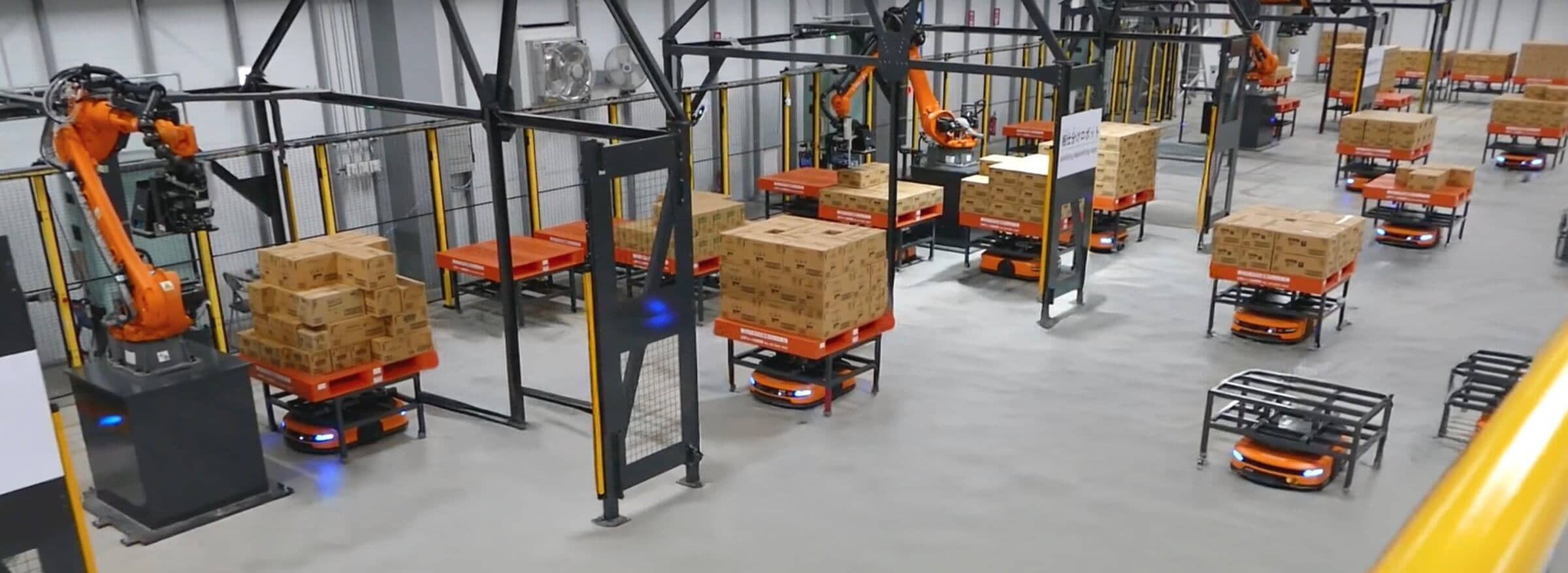
The first ten AMRs on a factory floor can sometimes feel like a software project. The hundredth feels like an airline. Somewhere between those two numbers, what looked like a teleoperation feature starts behaving like an operations company, with staffing rosters, escalation runbooks, customer audit trails, and SLAs the engineering team did not sign up to write.
That transition is where most robotics programs lose control of the cost curve. The robot teleoperation platform that worked for the pilot fleet does not scale linearly. And the controls a customer's safety team will demand for production are not the ones the engineering team designed for. This post is a practical guide to how managed teleoperation services actually scale for industrial fleets in 2026: what staffing models hold, what latency and capacity numbers to design around, and how to keep the operations side from outrunning the platform.
Adamo, the teleoperation engine for frontier robotics, runs this stack for industrial automation programs across humanoids, AMRs, and robot arms. The patterns below are drawn from the field, not a whiteboard.
Why scale changes the question
A pilot fleet is forgiving. Ten AMRs in a single warehouse share a network, share a staffing window, and tend to fail in similar ways. One shift of operators can cover the load, an engineer can absorb the edge cases the operators escalate, and the platform's design assumptions hold because the variance is small.
A production fleet is not forgiving. As soon as the program crosses 50 robots across two or three sites, every assumption from the pilot becomes the bottleneck. The network is no longer one network; it is whatever each customer site happens to run. The shift coverage is no longer 9 to 5 in one timezone; it is the union of every shift across every site that bought a robot. The intervention rate is no longer the average; it is the spike on Monday morning at site three when a new SKU lands on the floor.
The technical problem of robot teleoperation does not change at scale. The operational problem of robot teleoperation is what changes, and most teams discover it on a customer call. The first place it breaks is staffing.
Building a 24/7 staffing model that holds
The single biggest mistake we see is staffing the operator pool as a linear function of fleet size. Two operators for 20 robots, twenty operators for 200. The math does not work that way for two reasons.
First, intervention rates are not flat. Fleets that run at one intervention per robot per hour during a normal shift can run at three or four during a software release, a layout change, or a peak season. A pool sized for the average is underwater during the peak. A pool sized for the peak pays for empty consoles two thirds of the time.
Second, operator utilization above 70 percent is a trap. Operators who run at 90 percent utilization make mistakes that turn into incidents. Operators who run at 50 percent stay sharp. The right design target for safety critical robot teleoperation is closer to 60 to 65 percent average utilization with elastic headroom for spikes.
The model that holds in practice is built around three numbers: the steady state intervention rate per robot, the peak multiplier across a representative week, and the fleet's coverage window. From those three, the staffing schedule writes itself: enough operators per console for three shifts, with peak load absorbed by a managed pool that shifts capacity across multiple customer fleets rather than within one of them. Adamo's operator network is sized exactly this way across the customer base, which is what keeps the unit cost flat as any single fleet grows. Staffing handles the operational variance; the platform underneath has to absorb something else.
The robot teleoperation platform requirements at fleet scale
Most platforms tested in a 10 robot pilot fall over at 100, for reasons that are predictable once you know where to look.
The first is the latency floor under realistic network conditions. A 60ms glass to glass number on a lab bench is meaningless if it becomes 220ms on a customer site running over a private 5G slice with shared backhaul. The right number to ask any robot teleoperation platform for is the 95th percentile latency under cellular conditions from the kinds of sites the fleet will actually run in. Adamo runs as low as 40ms glass to glass, 180% faster than typical WebRTC stacks, and holds that floor through multi path bonding across LTE, 5G, and WiFi.
The second is behaviour under congestion. At fleet scale, several robots will be running over the same network segment at the same time, and the platform's congestion control decides whether control commands ride through the saturation or queue behind video frames. Conventional stacks built for video calls tend to back off the entire stream when packets drop, which is the worst possible behaviour for a manipulation task. The right design separates control and video onto dedicated streams so video degrades gracefully while the robot keeps responding.
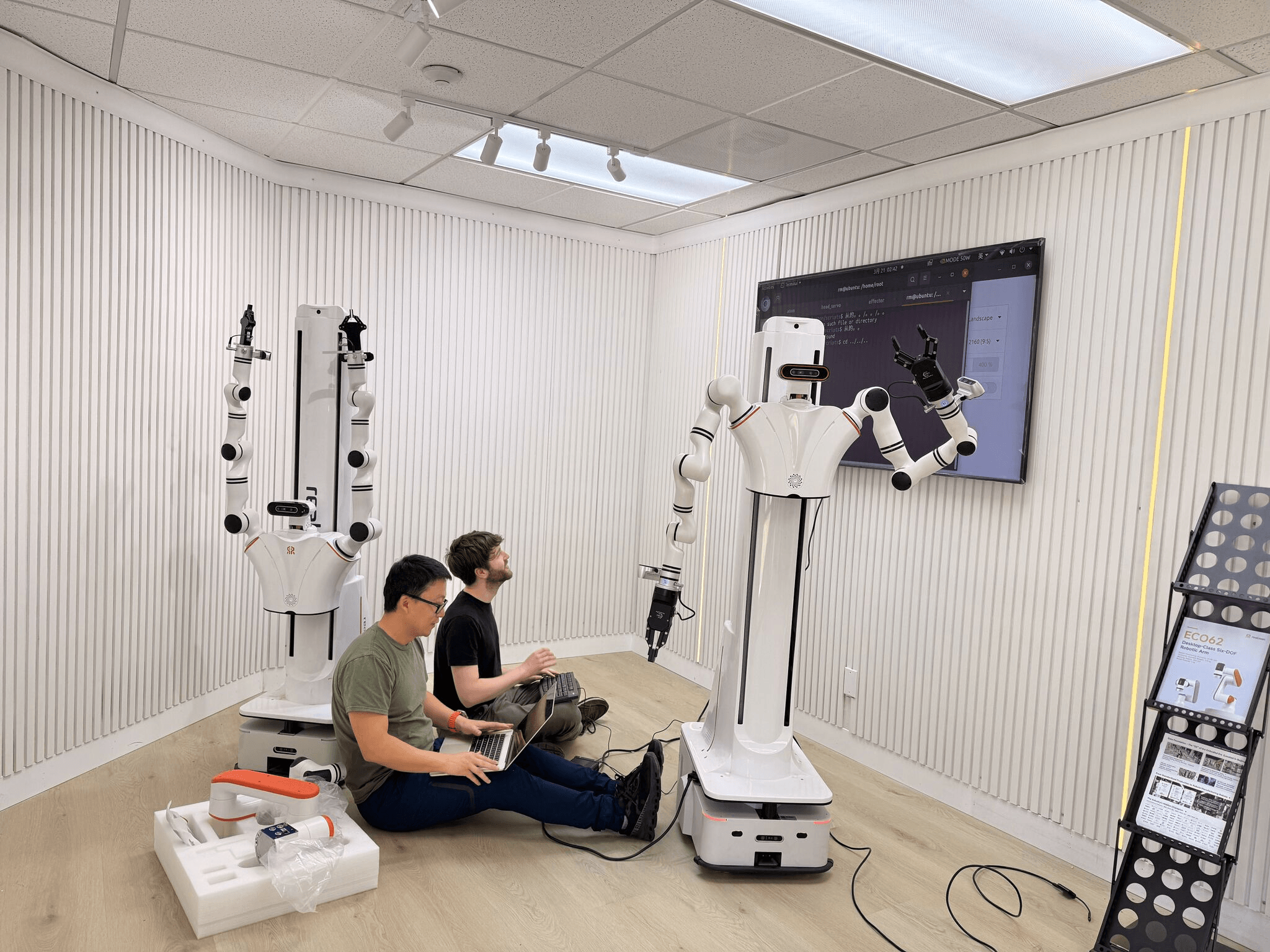
The third is integration cost across heterogeneous fleets. A program running humanoids, factory mobile robots, and robot arms across multiple sites does not have the time to integrate a separate teleop stack on each platform. A single 40MB binary with zero dependencies that drops onto the kernels real robots ship with, with native ROS and ROS2 support and NVIDIA compatibility, is the only model that holds across a diverse fleet.
The fourth is data capture. Every teleoperation session at fleet scale is generating training data for the next round of autonomy. Synchronized video, telemetry, sensor streams, and operator actions on a shared clock are the input to that loop. If the robot teleoperation platform cannot record them faithfully, the program is paying for interventions and getting nothing back in autonomy.
Operational controls that pass a customer audit
The platform and the operator pool are necessary but not sufficient. By the time a fleet hits 100 robots in production, the customer's safety team is asking questions the engineering team has not seen before: who is allowed in the operator facility, what is logged when an operator takes control, how are recordings stored, what happens when an operator loses the link, how is access revoked when a contractor leaves.
The controls that pass a 2026 procurement audit are a tight set:
Purpose built operator facilities with redundant ISPs, backup power, and biometric access. Home offices are not compatible with most enterprise customer security clauses.
Operator vetting on psychometric and performance screens, with documented retraining cycles.
AES 256 encryption end to end on every stream, video, telemetry, and control. SOC2 compliance for the underlying platform.
A 25 Mbps bandwidth floor per console, with documented headroom.
Audit logs that connect every operator action to a specific session, robot, and customer site, with retention windows the customer can verify.
A documented incident process: recordings, root cause writeups, customer notifications, insurance reporting.
These are the same controls a customer's safety team will ask for. Showing up with them documented, rather than building them after the first audit fails, is the difference between closing the deal and losing the quarter. Once the controls are in place, the program's job becomes measuring whether they actually work.
Instrumenting the fleet
A managed teleoperation program at scale is a metrics shop, not a service desk. The numbers that matter, in priority order:
Intervention rate per robot per hour, segmented by site and task.
Time to first operator response, p50 and p95.
Time to task recovery, p50 and p95.
Channel availability, with packet loss and jitter measured per session.
Operator utilization by shift, peak vs average.
Training data captured per intervention, with completeness measured: video, telemetry, action stream all present and time aligned.
Customer specific SLAs: uptime, response time, audit log completeness.
The right cadence is a weekly review of the trend, a monthly review of the cohort, and a quarterly review of the platform's behaviour under the customer's own network conditions. The wrong cadence is a board meeting where someone asks for a number nobody has been measuring.
How we built this at Adamo
Adamo sells the two halves of a managed robot fleet teleoperation program as a single package.
The software is the teleoperation engine: a 40MB binary with zero dependencies, glass to glass latency as low as 40ms, multi path bonding across LTE, 5G, and WiFi, native ROS and ROS2, NVIDIA compatibility, AES 256 encryption end to end, SOC2 compliance, and synchronized data capture built into the protocol so every session feeds the next training run.
The service is the operator network: vetted operators on psychometric and performance screens, running from purpose built facilities with redundant ISPs, backup power, biometric access, and a 25 Mbps bandwidth floor, on 24/7 coverage scaled to the fleet. We absorb variance across the customer base rather than within any single program, which is why the unit cost holds as fleets grow.
The pattern we see repeatedly: teams build a small in house operator pool for the first 20 robots, hit the staffing variance wall at 50, and switch to a managed model before they reach 100 because the in house math stops working.
The next 12 months
The programs that will scale industrial automation across humanoids, factory mobile robots, and robot arms in 2026 are not the ones with the best benchmark in the lab. They are the ones that picked a robot teleoperation platform that holds under real network conditions, a staffing model that absorbs variance instead of fighting it, and an operations program that passes a customer audit on the first try.
If you are scaling a fleet and the operations side is starting to outrun the software, we will run the math against your intervention rate, benchmark our platform against your current stack, and walk through the audit checklist with your team. Book a demo at adamohq.com.
FAQs
When should we move from an in house operator pool to a managed model?
The inflection point we see most often is around 50 to 100 robots, when intervention rate variance starts overwhelming a pool's ability to schedule against the average. In house pools struggle when peak load is several times the average. Managed pools absorb that variance by shifting capacity across multiple customer fleets. That is the model Adamo runs, and the longer walk through is in our managed vs in house teleoperation post.
What latency floor should we hold a robot teleoperation platform to?
Under 100ms glass to glass is the cliff for closed loop manipulation. Most teams should design for the 95th percentile under realistic network conditions from the actual customer sites the fleet will run in, not a lab number. Adamo runs as low as 40ms glass to glass, with multi path bonding across LTE, 5G, and WiFi.
How does multi path bonding differ from network failover?
Failover detects a problem on the active path, switches, and pays the detection cost on every switch. Multi path bonding sends packets across every available path in parallel and uses whichever copy arrives first. The difference is most visible during brief radio events on cellular, which failover treats as outages and bonding rides through cleanly. Adamo's transport layer is built around bonding rather than failover, which is why latency holds under poor cellular conditions where conventional stacks tend to drop out.
How long does integration take?
Adamo ships as a single 40MB binary with zero external dependencies and native ROS and ROS2 support. It drops onto the kernels real robots ship with, including older unpatched Linux versions, and most teams have it integrated in hours rather than months. NVIDIA compatible out of the box. The developer docs walk through the full integration path.