Table of Contents
- Start with the latency floor, not the average
- Ask how the network actually behaves when it gets ugly
- Check the integration footprint before anything else
- Treat security and compliance as table stakes, not upgrades
- Decide early whether you actually want to staff operators
- Make sure the platform feeds your autonomy roadmap
- Confirm the same engine runs across every robot class you ship
- Why Adamo is the right answer to this checklist
- FAQs
Most teams pick a teleoperation platform the same way they pick a CDN, and then spend the next two quarters paying for that decision in field hours.
Choosing a teleoperation platform is one of the few procurement decisions in robotics that shapes almost every other line item on the roadmap, yet most teams approach it the way they would approach buying a video API, treating teleoperation software as a commodity with a few benchmark numbers and a sales call. The result is a stack that demos beautifully for ten minutes and then quietly becomes the bottleneck that holds up every customer pilot for the next six months. We made the broader argument in the Adamo manifesto, and this post is the practical follow up: what the evaluation of any teleoperation platform actually has to cover before a robotics team signs a contract it cannot easily walk away from.
Start with the latency floor, not the average
If you read nothing else in any teleoperation software pitch deck, find the page that talks about glass to glass latency, then ask how it was measured, on what hardware, and over which network conditions. Average latency under lab WiFi is the easiest number for a teleoperation platform to publish and the least useful number to operate against, because the cases that hurt operators are the tail events on a real cellular link during a tower handoff at rush hour. The right question to push on is the latency floor under realistic conditions, and the right answer should sit in the tens of milliseconds rather than the hundreds, because everything above roughly 150ms degrades operator trust and everything above 250ms makes dexterous work effectively impossible. If you are still building intuition for why this number matters so much, our explainer on what teleoperation is walks through the physics in plain language.
Ask how the network actually behaves when it gets ugly
A teleoperation platform that only performs well on a clean office network is a demo, not a product. The real test is what happens when a robot drifts between cell towers, when an ISP saturates, or when WiFi inside a warehouse drops a packet every few seconds. Look for a transport layer that bonds multiple paths simultaneously across LTE, 5G, and WiFi rather than failing over from one to the next, because failover always leaves a visible seam in the operator video while bonding hides it. Ask vendors to show packet captures rather than slide deck claims, and ask whether the published numbers come from steady state or from the moment a path drops.
Check the integration footprint before anything else
Plenty of teleoperation software vendors look great until the integration timeline lands on an engineering team that is already late on three other deliverables. The questions worth asking up front are how large the binary is, what dependencies the teleoperation platform pulls in, whether it speaks ROS and ROS2 natively, and whether it runs on the NVIDIA hardware most modern robots already ship with. A single binary in the tens of megabytes with zero external dependencies is the kind of teleoperation software that lands cleanly in a CI pipeline, while a multi service install with custom kernel modules is the kind that quietly costs a quarter of engineering time. The same question applies to operator tooling, because a control plane that requires bespoke browser extensions or local installs adds friction to every shift change in the operator facility.
Treat security and compliance as table stakes, not upgrades
The moment a teleoperation platform leaves an internal demo and starts touching customer environments, encryption, access control, and compliance posture stop being nice to have and start being procurement blockers. Anything less than end to end AES 256 encryption on every stream should disqualify a vendor, as should the absence of an active SOC2 program. Beyond the certificates, ask how operator access is provisioned and revoked, whether sessions are auditable, and whether the network architecture survives an enterprise security review without a long list of caveats. The teams who skip this step end up rebuilding their stack during their first design partner negotiation, which is the worst possible time to discover that the original choice did not anticipate enterprise procurement.
Decide early whether you actually want to staff operators
This is the question most teams underestimate, and it is the one that splits the teleoperation platform market into two very different categories. Running operators in house means hiring, vetting, training, scheduling, and supporting a 24/7 workforce in a facility with redundant ISPs, backup power, biometric access controls, and a network connection that never drops below a usable bandwidth floor. Buying managed teleoperation services instead means handing all of that to a vendor whose entire business is keeping operators productive, which is the model we argued the economics behind in our piece on remote teleoperation. The short version is that almost every team that tries to run operators in house ends up spending more time on workforce operations than on robotics within the first year, which is exactly why managed teleoperation services tend to win on total cost of ownership.
Make sure the platform feeds your autonomy roadmap
A teleoperation platform that only handles real time control is solving half the problem, because the other half is turning every operator session into structured training data the autonomy stack can learn from. Look for teleoperation software that captures synchronized video, telemetry, and operator commands as a single stream, exportable in a format that drops cleanly into a training pipeline, because that triple is the highest signal demonstration data the industry currently has access to. The argument runs deeper in teleop vs full autonomy, but the operational point is simpler: teleoperation software that does not produce reusable data is a permanent line item rather than a path to autonomy, and the difference compounds over years.
Confirm the same engine runs across every robot class you ship
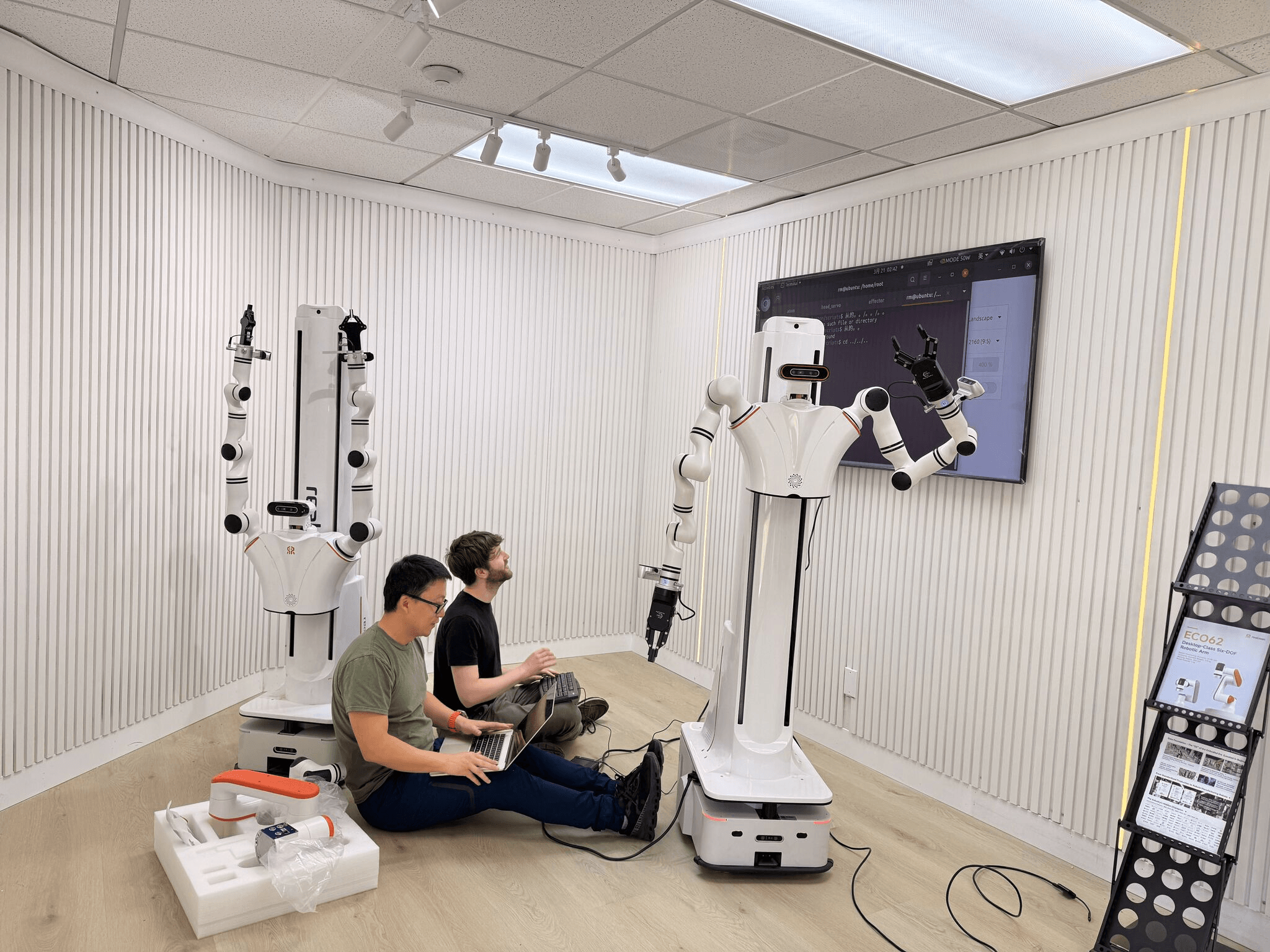
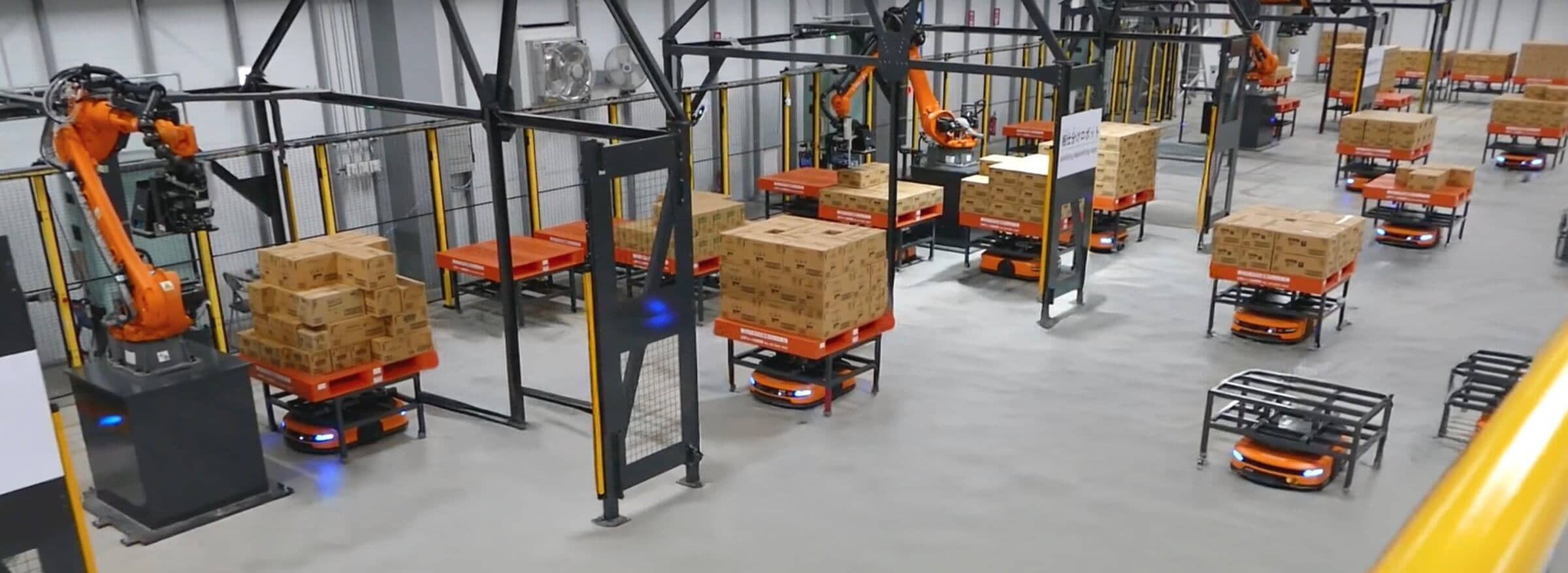
Most robotics roadmaps eventually involve more than one machine, and the teleoperation platform decision made for the first robot tends to lock in a posture for the rest of the fleet. Teleoperation software that fits a humanoid robot needs dexterous manipulation with balance feedback, while a teleoperation platform built for an autonomous vehicle needs sub second decisions across a sparse, high stakes intervention pattern, and one that fits a factory arm or an AMR needs reliable handoffs between the operator and the onboard planner at millisecond tolerances. A vendor that only supports one of those use cases is selling a custom integration rather than a platform, and that distinction matters the moment the roadmap adds a second robot class.
Why Adamo is the right answer to this checklist
Every criterion above is the result of watching robotics teams pick the wrong vendor and pay for it later, and the reason we built Adamo was to make sure none of them needed to be a tradeoff. The Adamo teleoperation platform ships glass to glass latency as low as 40ms, roughly 180 percent faster than a typical WebRTC stack, with multi path bonding across LTE, 5G, and WiFi delivered through a single 40MB binary that has zero dependencies and runs natively on ROS, ROS2, and NVIDIA hardware. Security comes in the form of AES 256 encryption end to end, full SOC2 compliance, and 99.5 percent platform uptime measured in production rather than promised in a slide. On the operator side, we pair that teleoperation software with fully managed teleoperation services running 24/7, staffed by psychometrically vetted operators inside purpose built facilities with redundant ISPs, biometric access controls, and a 25 Mbps backup bandwidth floor, so the workforce question becomes a vendor question rather than a hiring plan. If you want the rest of the answers in one place, our FAQ walks through every common question about the platform and the services in detail.
The teleoperation platform a robotics team picks today is the operator layer of every robot that team will ship for the next three years, which makes this one of the few procurement decisions worth slowing down to get right the first time. Start at adamohq.com when you are ready to see what the right teleoperation software and teleoperation services look like in production.
FAQs
What should robotics teams look for in a teleoperation platform?
A robotics team evaluating a teleoperation platform should focus on six things: glass to glass latency in the tens of milliseconds rather than the hundreds, multi path network bonding across LTE, 5G, and WiFi, native ROS and ROS2 integration with a small, dependency free binary, end to end AES 256 encryption with SOC2 compliance, the option to buy managed teleoperation services rather than staff operators in house, and a data pipeline that captures every session as structured training data for the autonomy roadmap. Any teleoperation software that cannot answer all six clearly is selling a demo rather than a production system.
What is the difference between teleoperation software and teleoperation services?
Teleoperation software is the technical stack that streams video and telemetry from the robot to a remote operator and sends commands back at low latency. Teleoperation services are the human operations layer that runs on top of that software, covering hiring, vetting, training, scheduling, and supporting 24/7 operators inside secure facilities. A complete teleoperation platform offers both, so the robotics team does not have to choose between owning the workforce and owning the technology.
How low does latency need to be on a teleoperation platform?
For dexterous tasks like humanoid manipulation or precise robot arm work, glass to glass latency on a teleoperation platform needs to sit in the tens of milliseconds, ideally at or below 40ms, because operator trust degrades above roughly 150ms and dexterous work becomes effectively impossible above 250ms. Adamo teleoperation software delivers latency as low as 40ms, around 180 percent faster than a typical WebRTC based teleoperation platform on the same hardware.