Full autonomy is the goal every robotics roadmap points at, but the machines shipping today still hand the hard moments to a person. Here is why that handoff is a feature, not a failure.
TLDR: Robot teleoperation and autonomy are not rivals. The autonomy stack handles the dense middle of the distribution and routes the rare edge cases to a remote operator, and that handoff is what lets robots ship today. The catch is the link. Human in the loop only works if teleoperation holds glass to glass latency in the tens of milliseconds under real network conditions, because a slow fallback is a second failure mode rather than a safety net. Done right, every teleoperation intervention becomes training data that shrinks tomorrow's intervention rate, which is how robot teleoperation turns into the bridge to autonomy instead of a permanent cost. Adamo runs that whole loop with sub 40ms teleoperation software and fully managed operator coverage.
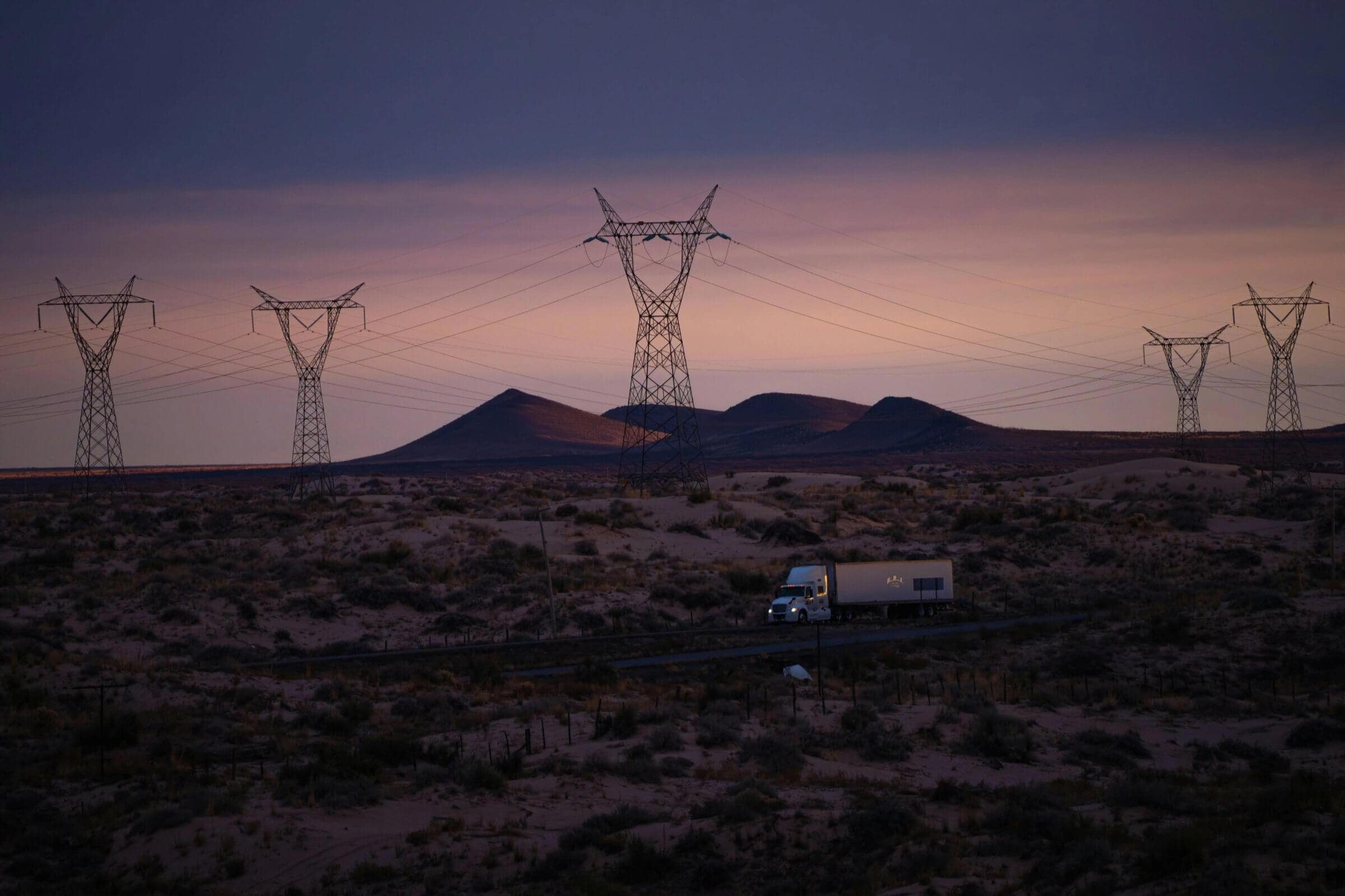
A humanoid picks parts off a bin for eight hours without a hiccup, then freezes on the one carton that arrived crushed and rotated ninety degrees. An autonomous truck drives four hundred miles of clean interstate, then stops dead at a construction zone where a flagger is waving it through a coned off lane the map does not know about. In both cases the autonomy stack did almost everything right and then hit the small fraction of the world it was never going to fully cover on its own. The question that decides whether either robot ships is not whether it can reach full autonomy someday. It is what happens in the seconds after it gets stuck today.
That is the real teleoperation versus autonomy debate, and it is usually framed wrong. People treat robot teleoperation and autonomy as competing philosophies, as if a team has to pick a side. In production they are two ends of the same system, and teleoperation is what lets the autonomous part exist at all, because the human in the loop is the thing that catches the cases autonomy cannot.
Autonomy is a distribution, not a switch
The mistake behind most autonomy timelines is treating autonomy as a binary that flips on once the models get good enough. Real deployments do not work that way. A robot operating in an unstructured environment faces a long tail of situations, and the autonomy stack handles the dense middle of that distribution extremely well. The problem lives in the tail: the crushed carton, the flagger, the puddle that reflects like a wall, the pallet parked six inches into the lane. These are not bugs to be patched one at a time. They are a structural property of open environments, where the number of rare events is effectively unbounded.
This is the 90 percent problem, and it is brutal precisely because the last slice is where the value and the liability both concentrate. A system that is autonomous 99 percent of the time is not 99 percent finished. If the remaining 1 percent contains the cases most likely to injure a person, damage inventory, or strand a robot in the middle of a customer site, then that 1 percent is the entire product risk. Closing it with pure autonomy means solving perception, prediction, and planning for events the robot may see a few times a year. Closing it with a human in the loop means routing those events to an operator who resolves them in seconds. One of these paths ships this year.
What the human actually does in the loop
Human in the loop does not mean a person joysticking the robot through every task. Modern robot teleoperation means the robot runs autonomously by default and escalates to a remote operator when its own confidence drops below a threshold. The operator sees the same scene the robot sees, understands the situation a model cannot yet parse, issues a correction or takes direct control, and hands autonomy back once the robot is clear. On a healthy fleet, one operator can supervise many robots, because most of them are autonomous most of the time and interventions are short.
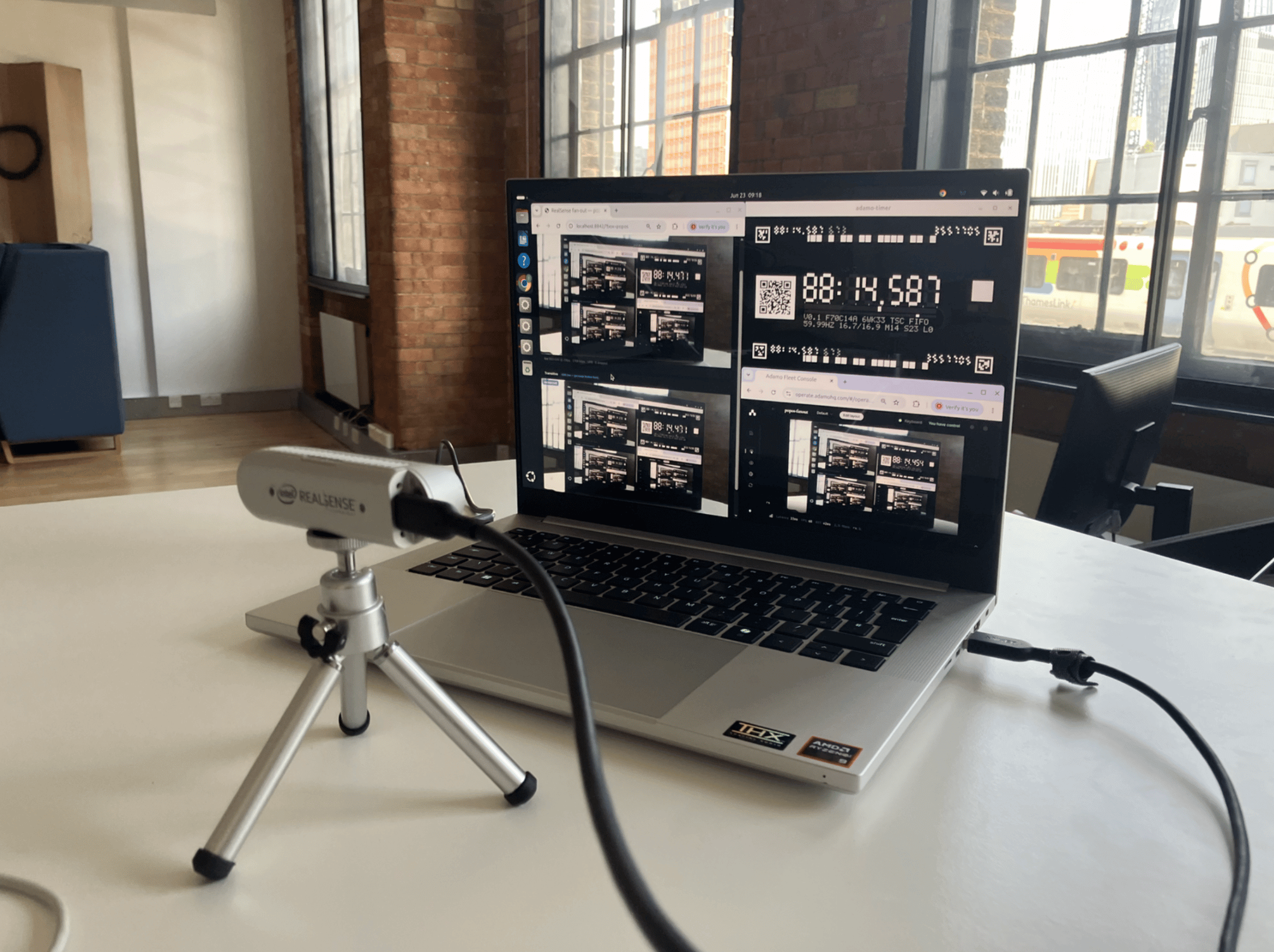
The mechanics of that handoff are where teleoperation stops being a philosophy and becomes an engineering problem. The operator needs to see the robot's world with enough fidelity and little enough delay to act as if they were standing next to it. For an autonomous vehicle, an intervention is a sparse, high stakes decision where a half second of extra latency changes the outcome. For a humanoid doing dexterous manipulation, sustained control degrades the moment glass to glass latency climbs past the point where hand and eye stop feeling connected. Operator trust starts to erode above roughly 150ms, and dexterous work becomes effectively impossible above 250ms. If the remote link cannot hold latency in the tens of milliseconds under real network conditions, the human in the loop is not a safety net. It is a second failure mode stacked on the first. We walk through where that budget goes in our breakdown of teleoperation latency.
The link is the hard part, not the idea
Everyone agrees a human should catch the edge cases. The reason human in the loop still gets dismissed is that most people picturing it are picturing a typical WebRTC stack streaming video over a single cellular connection, which falls apart exactly when it is needed most. A robot that gets stuck is often stuck somewhere with ugly network conditions, drifting between cell towers, sharing a saturated warehouse access point, riding a link that drops a packet every few seconds. A transport layer that fails over from one path to the next leaves a visible seam in the operator's video at the worst possible moment. A transport layer that bonds multiple paths at once across LTE, 5G, and WiFi hides the drop before the operator ever sees it. The difference between those two designs is the difference between an intervention that resolves in five seconds and one that makes the situation worse.
This is why the teleoperation versus autonomy framing collapses under inspection. The quality of your autonomy in production is capped by the quality of your fallback, and the quality of your fallback is a latency and reliability problem, not a philosophical one. Teams that treat the remote link as an afterthought discover during their first hard pilot that their autonomy is only as deployable as their worst network minute.
Interventions are how autonomy gets better
The part of this debate that gets missed entirely is that the human in the loop is not just keeping the robot alive today. Every intervention is a labeled example of exactly the situation the autonomy stack could not handle, captured at the precise boundary where the current model fails. When a teleoperation system records that intervention as synchronized video, telemetry, and operator commands in a single stream, it produces the highest signal training data in robotics: a demonstration of the correct action in the specific context where the robot needed it.
That flips the economics of the whole system. In house teams often see teleoperation as a permanent cost, a room full of operators that never goes away. Done right, it is the opposite. The interventions of today are the training set that shrinks the intervention rate of tomorrow, which is the actual mechanism by which a fleet climbs toward autonomy. Teleoperation is not the alternative to autonomy. It is the data engine that produces it. We make the fuller version of this argument in teleop versus full autonomy.
Where Adamo fits
This is the exact system Adamo was built to run, and its three pillars map directly onto the human in the loop lifecycle: Integrate, Intervene, Evolve. Integrate means the teleoperation engine drops into the existing stack as a single 40MB binary with zero dependencies, native ROS and ROS2 support, and NVIDIA compatibility, so the fallback path is not a six month project. Intervene means glass to glass latency as low as 40ms, roughly 180 percent faster than a typical WebRTC stack, delivered through multi path bonding across LTE, 5G, and WiFi so an operator can take control cleanly even when the robot is stuck on an ugly link. Every stream is AES 256 encrypted and the platform runs at 99.5 percent uptime under SOC2 compliance, because an intervention layer that touches customer environments has to survive an enterprise security review. Evolve means every session is captured as synchronized video, telemetry, and operator commands, exportable straight into a training pipeline, so the human in the loop keeps paying down its own cost.
For teams that would rather not staff an operator floor, Adamo also runs the human layer as fully managed teleoperation services: psychometrically vetted operators working 24/7 from purpose built facilities with redundant ISPs, backup power, biometric access controls, and a 25 Mbps backup bandwidth floor. Whether the robot is a humanoid doing dexterous work or an autonomous vehicle handling sparse, high stakes interventions, the same engine holds the link when autonomy runs out of road.
Full autonomy is still the destination, and nothing here argues otherwise. The point is that the road to it runs through a human in the loop, and the teams that get there first will be the ones who treated that handoff as core infrastructure rather than a temporary crutch. See what that looks like in production at adamohq.com.
FAQs
What is the difference between teleoperation and autonomy?
Autonomy is the robot deciding and acting on its own, while teleoperation is a remote human deciding and acting when the robot cannot. They are not competing choices. A production system uses autonomy for the dense, common part of the task distribution and robot teleoperation for the rare edge cases in the tail, so the two run as one system rather than as alternatives. This is the model Adamo is built around, framed as Integrate, Intervene, and Evolve: the teleoperation engine plugs into the existing autonomy stack, a human handles the edge cases in real time, and every session is captured as training data that improves the autonomy over time.
Why does human in the loop still matter if robots are becoming autonomous?
Human in the loop still matters because open environments contain an effectively unbounded number of rare events, and those edge cases are where most of the safety and business risk lives. Solving every one of them with pure autonomy can take years, whereas teleoperation lets a remote operator resolve them in seconds today. That is what makes a robot deployable now instead of after the autonomy stack is theoretically finished. Adamo supports this either as software teams run themselves or as fully managed teleoperation services, staffing psychometrically vetted operators 24/7 from purpose built facilities so the human layer is always available when a robot escalates.
How low does teleoperation latency need to be?
For dexterous work like humanoid manipulation, robot teleoperation needs glass to glass latency in the tens of milliseconds, ideally at or below 40ms, because operator trust degrades above roughly 150ms and dexterous control becomes effectively impossible above 250ms. For autonomous vehicle interventions the tolerance is different but still tight, since a half second of extra delay can change the outcome of a high stakes decision. Adamo delivers glass to glass latency as low as 40ms, roughly 180 percent faster than a typical WebRTC stack, using multi path bonding across LTE, 5G, and WiFi so the link holds even when the robot is on an ugly network.